
The introduction is one of the most critical components of a research paper. It creates the first impression, establishes the context of the study, and guides the reader into the core argument. A well-structured introduction not only captures attention but also clearly communicates the purpose and direction of the research.
This guide outlines the key elements of writing an effective research paper introduction and offers practical strategies to improve clarity, coherence, and engagement.
A strong introduction:
Without a clear introduction, even well-researched work can appear unfocused or difficult to follow.
The first sentences should engage the reader and introduce the topic effectively. This does not require dramatic language, but it should provide a clear entry point into the subject.
You may begin with:
The aim is to position the reader within the subject area without overwhelming them.
After the opening, provide essential background information. This helps the reader understand the broader context in which your research sits.
This may include:
Keep this section focused as it should inform, not replace, the literature review.
A clear research problem is at the core of a strong introduction. This should be specific and directly related to the focus of the paper.
Ask:
A well-defined problem gives the paper direction and purpose.
The thesis statement is the central argument or objective of the paper. It should be:
This statement acts as a guide for the reader, outlining what the paper will argue or demonstrate.
Research questions help frame the investigation and clarify the scope of the study. They should be:
Strong research questions provide structure and ensure the study remains coherent.
In some research contexts, particularly in applied, design-led, or policy-oriented work, research objectives are used instead of—or alongside—research questions.
Objectives clearly outline what the research aims to achieve. They are typically more direct and action-oriented than research questions, focusing on outcomes rather than inquiry.
Effective research objectives should be:
Including well-defined objectives helps clarify the direction of the research and ensures that the scope of the paper remains focused and coherent.
An effective introduction highlights the gap your research addresses. This shows how your work contributes to existing knowledge.
This does not require an extensive review, but should briefly indicate:
End the introduction by briefly explaining how the paper is organised. This helps readers navigate the content.
For example:
This roadmap improves readability and clarity.
References play an important role in establishing the context of a research paper. They help situate the study within existing knowledge and demonstrate engagement with relevant academic work.
However, the use of references in the introduction requires careful balance.
Including too few references may make the research appear unsupported or disconnected from the broader field. On the other hand, excessive referencing can overwhelm the introduction and shift its focus towards a detailed literature discussion, which is more appropriate for the literature review section.
The introduction should therefore:
A well-balanced use of references helps establish credibility while maintaining clarity and focus.
An effective introduction requires careful balance. While it should provide sufficient background to situate the research, it should not attempt to replace other sections of the paper.
Overloading the introduction with extensive literature discussion, detailed methodology, or in-depth analysis can weaken its clarity and structure. These elements are typically developed in dedicated sections such as the literature review and methodology.
The role of the introduction is to:
Maintaining this balance ensures that the paper remains well-structured, allowing each section to fulfil its purpose effectively.
While the elements of a strong introduction are widely recognised, their order and emphasis may vary depending on the nature of the research.
In some cases, the research problem may be introduced early, followed by background context. In others, the introduction may begin with broader contextual framing before narrowing down to specific research questions or objectives.
The organisation of the introduction should be guided by:
Rather than following a rigid formula, a well-crafted introduction brings these elements together in a way that feels logical, coherent, and purposeful. This flexibility allows the writer to present the research in the most effective and engaging way.
Although the introduction appears at the beginning of a research paper, it is often most effective to write it after the main body of the paper has been developed.
At that stage, the researcher has a clearer understanding of:
Writing the introduction too early can lead to inconsistencies between what is proposed and what is actually discussed in the paper. By drafting or refining the introduction later in the writing process, it becomes easier to ensure that it accurately reflects the content and direction of the research.
This does not mean that no introduction should be drafted at the beginning. An initial version can help guide the writing process, but it should be revisited and refined once the paper is complete.
Drafting an initial introduction at the beginning of the writing process can be helpful in establishing direction and structure. However, this structure should not be treated as fixed.
As the research develops, new insights, arguments, and relationships between ideas often emerge. It is therefore essential to remain open to revising both the structure of the paper and the introduction itself.
Writers should not feel constrained by their initial outline or early draft. Instead, the structure should evolve in response to the research, ensuring that the final paper presents its ideas clearly and logically.
The primary objective of a research paper is to communicate the research effectively. Achieving this may require adjustments throughout the writing process, including reordering sections, refining arguments, or reshaping the introduction to better reflect the work as a whole.
The effectiveness of an introduction depends not only on its structure, but also on the clarity of its language.
Academic writing should be:
Overly complex sentences, vague expressions, or excessive detail can make the introduction difficult to follow. Instead, the focus should be on communicating ideas as clearly and efficiently as possible.
Clarity does not mean oversimplifying the research. Rather, it ensures that complex ideas are expressed in a way that is accessible and coherent. A well-written introduction allows the reader to understand the purpose and direction of the research without confusion.
A strong research paper introduction sets the foundation for the entire study. By clearly establishing context, defining the research problem, and presenting a focused thesis, the introduction guides the reader and strengthens the overall structure of the paper.
Careful attention to this section improves both clarity and impact, making the research more accessible and effective.
Booth, W. C., Colomb, G. G., & Williams, J. M. (2008). The craft of research (3rd ed.). University of Chicago Press.
Becker, H. S. (2007). Writing for social scientists: How to start and finish your thesis, book, or article (2nd ed.). University of Chicago Press.
Hart, C. (2018). Doing a literature review: Releasing the research imagination (2nd ed.). SAGE Publications.
Murray, R. (2013). Writing for academic journals (3rd ed.). Open University Press.
Swales, J. M., & Feak, C. B. (2012). Academic writing for graduate students: Essential tasks and skills (3rd ed.). University of Michigan Press.
Sword, H. (2012). Stylish academic writing. Harvard University Press.
Wallwork, A. (2016). English for writing research papers (2nd ed.). Springer.
Sign in to continue
Not a member yet? Sign up now

Administrative Assistant
Deniz Bol is the Administrative Assistant at SPACE Studies, where she supports the day-to-day operations and contributes to the smooth functioning of the organization. Alongside her administrative role, Deniz is an artist with a passion for creative expression. She is currently pursuing her studies at the University of the Arts London (UAL), where she continues to develop her artistic practice. Her organizational skills, paired with her artistic background, make her a valuable asset to the SPACE Studies team, helping bridge the worlds of administration and creativity.
E-mail: denizbol@spacestudies.co.uk

Digital Marketing Consultant
Murat Oktay is the Digital Marketing Consultant at SPACE Studies, where he provides strategic guidance to enhance our digital presence and community engagement. With a keen eye for digital marketing trends and best practices, Murat plays a key role in refining our content strategy, expanding our online reach, and connecting with a wider audience. His expertise in digital tools and innovative marketing techniques aligns with SPACE Studies’ mission as a social enterprise, ensuring that our campaigns are impactful and resonate with our commitment to social responsibility in architecture and design. Outside his work with SPACE Studies, Murat stays at the forefront of digital marketing advancements, continually exploring new tools and sharing his insights with peers.
E-mail: muratoktay@spacestudies.co.uk

Marketing Manager
Santa Noella Matabaro is the Marketing Manager of SPACE Studies, bringing her expertise in strategic planning, community engagement, and relationship-building to the organization’s mission as a social enterprise. With a background in Politics & Law from the University of Kent, Santa combines analytical insights with a creative approach to advancing SPACE Studies’ vision of fostering interdisciplinary dialogue in architecture, design, and urban planning. In her role, she develops targeted campaigns and strategic partnerships, building brand presence and fostering meaningful connections with the community. Santa’s collaborative and people-centered approach enhances SPACE Studies’ impact, aligning with its commitment to social responsibility and innovation in the built environment.

Academic Content Coordinator
Betul Uckan is an architect and dedicated academic with a background in both architectural practice and research. She holds a Master of Science in Architectural Design and a Bachelor’s degree in Architecture from Istanbul Technical University, where she cultivated her interests in architectural theory and design. Betul has gained experience as a research assistant in various universities, contributing to design studios and foundational courses. She has also worked in the field as an architect with projects focused on design, modeling, and construction, and has been involved in notable projects, including Maltepe Piazza and Emaar Square in Istanbul. With her expertise spanning both digital and material architecture, Betul brings a dynamic, interdisciplinary approach to her role as the Academic Programme Coordinator.
E-mail: betuluckan@spacestudies.co.uk
Senior Researcher & Managing Editor
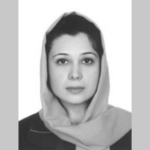
Arghavan Pournaderi is a senior researcher in the field of architectural conservation and restoration, with an academic foundation in architecture and specialized expertise in historic sites and buildings. Completing her PhD at the Art University of Isfahan, Iran, in 2019, her research has contributed to the understanding of Iran’s architectural heritage, with a focus on Isfahan’s urban and architectural evolution during the Safavid period. In addition to her extensive research, Dr. Pournaderi has held academic positions at various institutions in Isfahan, teaching at both undergraduate and graduate levels. Her work extends beyond academia as she contributes to SPACE Studies as Senior Researcher & Managing Editor, where she oversees scholarly initiatives that foster deeper interdisciplinary dialogue in architecture and heritage conservation.

Senior Researcher & Educational Consultant
Gregory Cowan is a Senior Researcher and Educational Consultant at SPACE Studies, where he leads initiatives that bridge academic research and practical application in architecture and urban design. He contributes his extensive experience to mentoring postgraduate students, designing educational workshops, and guiding community-focused projects. Gregory is also a freelance academic at the University of Wales Trinity St David and the University of Westminster, and founder of The Architects Coach. His expertise spans architectural workspace analysis, professional development, and positive intelligence coaching.
E-mail: gregorycowan@spacestudies.co.uk

Senior Researcher
Alison Hand is a Senior Researcher at SPACE Studies. She is a painter and writer with an MA in Painting from the Royal College of Art. Alison’s work focuses on creating absurd, unstable heterotopic spaces and dialogues with painting history. She is currently the Artist in Residence for King’s College London Philosophy Department on the Dreams and Wakeful Consciousness Research Project, exploring themes of time and simultaneity in new work. Alison has received numerous awards for her painting and is currently working with Bloomsbury Publishers on a major essay on Drawing in Contemporary Art. She is also the BA Fine Art Programme Leader at Art Academy London and co-director of Cement Arts. Her role at SPACE Studies involves leading research projects, mentoring junior researchers, and contributing to our artistic and academic initiatives.
E-mail: alisonhand@spacestudies.co.uk

Senior Researcher
Julian Wild is a Senior Researcher at SPACE Studies and the Sculpture Program Leader at The Art Academy London. With over 30 years of experience in creating and exhibiting sculptures, Julian has worked with high-profile clients such as Cate Blanchett and the University of Oxford. A fellow and former vice president (2015-2019) of the Royal Society of Sculptors, his work has been featured at venues like Modern Art Oxford and Chatsworth House. At SPACE Studies, Julian leads research projects, mentors junior team members, and conducts workshops that blend art and urban studies. In his free time, he enjoys attending academic conferences and crafting new sculptures.
E-mail: julianwild@spacestudies.co.uk

Director of Publications & Senior Researcher
Elif Suyuk Makakli (Associative Professor) earned her PhD in Architecture from the Vienna University of Technology, where she studied the impact of technology on architecture under Prof. William Alsop. With extensive experience in architectural practice in Istanbul and Vienna, she is now an Associate Professor at FMV Isik University, focusing on design education and technology. At SPACE Studies, Elif serves as both the Head of Publications and Senior Researcher, guiding scholarly content and contributing to research initiatives. She is dedicated to mentoring and fostering design innovation.
E-mail: elifsmakakli@spacestudies.co.uk

Director of Research
Sanaz Shobeiri is an architect, urban designer, and landscape urbanist, currently a postdoctoral researcher in the Department of Planning at Queen’s University Belfast. Her research focuses on age-gender inclusiveness and the interplay of architectural, historical, political, and sociocultural dimensions in urban spaces, exemplified by her project on city centres in Belfast and Tehran. Sanaz holds a PhD in Urban Planning from the University of Tehran and has a robust portfolio in sustainability and urban theory. As Head of Research at SPACE Studies, she leads innovative research initiatives, fostering collaboration and academic excellence. In her free time, Sanaz enjoys exploring urban landscapes and supporting community development.
E-mail: sanazshobeiri@spacestudies.co.uk

Creative Director
Selin Gulce Sozmen is the Creative Director at SPACE Studies, where she leads the artistic vision and design strategy for the organisation. With a background in graphic design and visual arts, Selin has been instrumental in creating visually captivating books, journals, and event posters. Her role extends to developing and coordinating workshops and creative projects, ensuring that all visual materials meet the highest standards of quality and innovation. Selin’s dedication to creativity and excellence drives the visual and creative direction of SPACE Studies, making her an essential part of the team.
E-mail: selinsozmen@spacestudies.co.uk
Founder & Executive Director
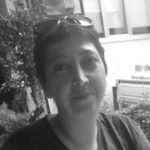
Pinar Engincan is the Founder and Executive Director of SPACE Studies, an innovative social enterprise focused on fostering interdisciplinary dialogue and education in architecture and urban design. With extensive experience as a lecturer and researcher, Pınar holds a PhD in Architecture and has led numerous academic initiatives. Her career includes curriculum development, international collaborations, and research on housing and urban policies. Passionate about bridging academia and community, she champions accessible education and consultancy services, empowering individuals to shape the built environment.
E-mail: pengincan@spacestudies.co.uk